I will slowly lose my daughter, 5, to dementia-like condition, after docs said she’d ‘grow out’ of symptoms
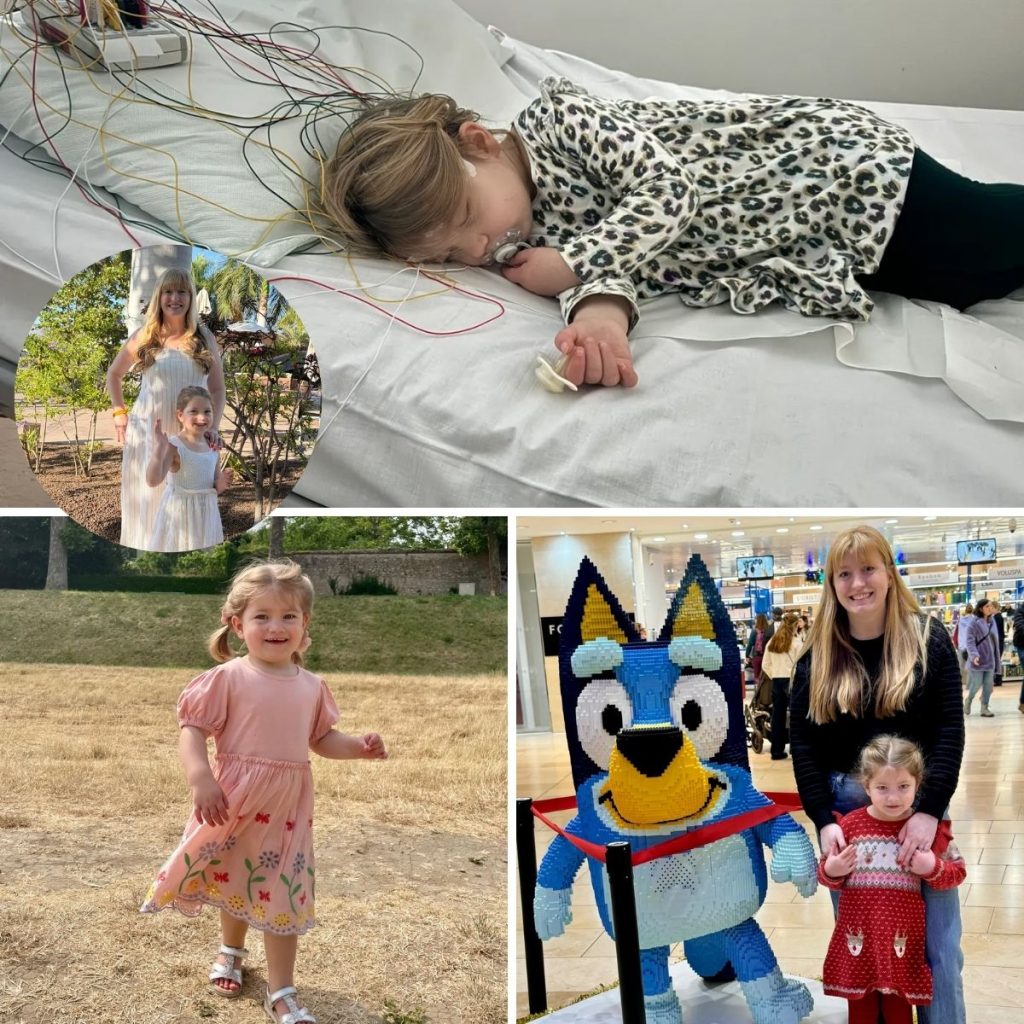
A MUM says her daughter will slowly develop dementia-like symptoms, losing the ability to walk, talk and speak.
Louise van der Valk, 36, a claims director from Essex, says her daughter Scarlett had shown no signs of health problems until her first birthday party.

Scarlett suffered a 30-minute seizure on the day of her first birthday party, in February 2022, and Louise said doctors initially reassured her that she would likely outgrow them.
However, Scarlett suffered more in April 2022 and October 2022, while also experiencing delays in her speech development.
After genetic testing, she was diagnosed with beta-propeller protein-associated neurodegeneration (BPAN), a condition caused by a WDR45 gene mutation.
This can cause symptoms similar to dementia and Parkinson’s disease such as cognitive decline and losing the ability to walk, talk and swallow.


Despite initially being told Scarlett might never speak, she is now able to run, talk and attend a mainstream school with special educational need support.
But Louise is aware the condition is likely to cause her daughter to lose skills later in life and is now campaigning for a cure in the hope it could “save” Scarlett’s life.
Louise, who is also a mother to Felicity, three, said: “Learning that even if Scarlett does remain relatively mild in childhood, without treatment the overall outcome doesn’t change, was devastating.
“That was when the grief really hit me – the realisation that one day I would lose my daughter.”
Louise gave birth to Scarlett in February 2021 and said during her first year, she was hitting “all her milestones” and had started crawling.
However, on the day of her first birthday party in February 2022, just an hour before guests were due to arrive, Scarlett suffered her first seizure.
Louise said she called 999 and Scarlett continued to seize for half an hour, which she found “terrifying”.
She explained: “Her eyes glazed over, she started to dribble and she went very still.
“If you click your fingers in front of her face and she’s not reacting, you know she’s about to start shaking.”
Tests confirmed she did not have epilepsy, and Louise said doctors reassured her that febrile seizures are relatively common in children and that Scarlett would likely grow out of them.
In April 2022, Scarlett suffered another prolonged complex febrile seizure while at nursery and was rushed to hospital. She was given rescue medication to keep at home in case it happened again.
In October 2022, Scarlett, then 20 months and not speaking, suffered another seizure lasting about one hour and although her parents administered the rescue medication, the seizure did not stop and Scarlett was taken to hospital.
She remained in hospital for several days for observation, referred for an MRI and full genetic testing, of which Louise got the results of in January 2023.
Louise said: “We were told she had a genetic mutation, but we didn’t know what any of it meant, it was horrendous.
“I just broke down, I had to tell my husband the news and I didn’t have the answers to any of his questions.
“I admit I’ve had a very charmed life, and it just never occurred to me that something bad would happen.”
In April 2023, she had an appointment with a genetic counsellor, followed by a consultation in June at Great Ormond Street Hospital, where doctors confirmed Scarlett’s seizures were caused by a WDR45 gene mutation.
This is associated with a rare iron-storage disorder called BPAN, which in early childhood can cause seizures, developmental delays and intellectual disability.
The condition is progressive and, over time – typically during late adolescence or adulthood – affected individuals can develop movement disorders, problems with muscle tone and a loss of cognitive skills.
Louise said: “My first feeling was complete shock and disbelief. It honestly felt like a nightmare I couldn’t wake up from.”

Within a year of her diagnosis, Scarlett had begun receiving support from specialists and her speech was progressing.
Louise said doctors believe Scarlett may have a milder case. She is now able to run and talk, whereas some children with the condition are non-verbal and immobile.
There is currently no cure for BPAN, only treatment to manage symptoms.
Louise said: “It’s heart breaking to know she’s going to regress but if they find a cure, she could potentially live a happy, long and normal life.”
Louise and fellow campaigners from Action for BPAN, where she serves as a parent ambassador, are hoping to raise £2.3million to help gene therapy research progress to the next stage of clinical trials, and secure Government support.
When Scarlett was first diagnosed, Louise raised more than £30,000 for Great Ormond Street Hospital Charity to support BPAN research.
Louise said: “We’re doing it for our children. They could find a cure within their lifetime.
“We could save Scarlett’s life and the lives of other children, and people can be part of that journey.”
Louise said Scarlett loves Disney princesses, is always singing and shares a very “special bond” with her younger sister.
“I really struggle with the fact that everything is out of our control,” says Louise, who has found that focusing on finding a cure has helped preserve her “sanity”.